What does a podiatrist treat?

A qualified podiatrist is a specialist who deals with foot problems. People learn that such a cosmetology profile exists only when problems arise - changes in the nail plates, deformation of the fingers, pain in the foot, calluses, and other problems.
The most common reasons for visiting a podiatrist:
- pain in the foot;
- core calluses, corns;
- warts (plantar, flat);
- ingrown toenail;
- deformed or thickened nail plate;
- presence of diabetic foot;
- arthrosis of the ankle joint;
- paronychia (inflammation of the nail folds);
- increasing the height of the arch (cavity foot);
- Morton's neuroma (benign thickening);
- fungal infections;
- hyperkeratosis;
- cracks in the skin of the heels;
- excessive sweating of feet.
Since a podologist is a narrow specialization, to make the correct diagnosis he works together with doctors of such specialties as phlebologist, dermatologist, endocrinologist, and other highly specialized specialists.
But treatment and counseling are the direct responsibility of the podiatrist, for which his workplace is equipped with the necessary instruments, equipment, and special stands for ease of manipulation.
Who is a podiatrist - a doctor who provides consultations on proper foot care, rational selection of shoes, and safe pedicure. These are very necessary recommendations, because many problems people have arise precisely because of the violation of these rules.
Therefore, timely, regular visits to the podiatrist’s office are the key to preventing many foot problems, because only a specialist can identify disorders in the early stages, when the patient does not yet feel them and does not even know about their existence. This is very important because preventive measures are much cheaper and require minimal intervention compared to an established disease or painful condition. And, therefore, the main task that a podiatrist solves is prevention and early detection of changes in the foot.
INGRONED NAIL
This is a fairly common disease that a podiatrist has to deal with. The main reason for this is improper pedicure (cutting nails very short), tight, short or high-heeled shoes.
It is very rare to be able to fix this problem on your own, but complications often arise. In view of this, if there are signs of the nail plate growing into the skin of the finger and pain occurs, you should immediately contact a podiatrist in Kyiv, Kharkov, Dnieper and other cities.
After all, modern approaches to treatment and the latest technologies make it possible to get rid of this problem without surgical intervention.
HOW IS NON-SURGICAL CORRECTION OF AN INGROWN NAIL OCCURRED?
Special devices (B-S plates, staples) are glued to the nail with special glue, lift it and the pain immediately disappears, since the ingrown nail stops putting pressure on the inflamed nail fold. The patient can walk and lead a normal life. Plates or staples allow you to correct the nail as it grows, preventing re-ingrowing, which sometimes happens after surgical treatment.
The duration of treatment depends on the severity of the disease, as well as the individuality of the patient’s body. If you contact a podiatrist in a timely manner, the course of treatment with this method can take from two to three weeks to a month, and if it is late, the treatment period will be significantly longer.
MEDICAL PEDICURE
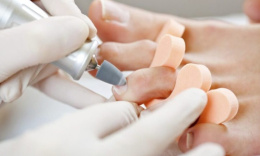
This pedicure is significantly different from the usual one, since it combines the treatment of fungal infections of the nails plates, getting rid of corns, cracks, and other problems. It is carried out using special devices, various attachments (grinding and polishing discs, cutters, burs, and other devices), which remove corns, calluses, cracks, and rough tissue.
In case of detection of fungal infections of the nails, excessive sweating, podologist in Obolon will select the necessary medications for treatment, recommend cosmetic products for care.

DIABETIC FOOT SYNDROME
Diabetic foot is a late complication of diabetes mellitus, resulting in a number of dangerous changes in the foot.
The fact that people with diabetes are beginning to develop diabetic foot may be indicated by the appearance of cracks in the skin, its thickening or thinning, leading to a decrease and then loss of sensitivity.
In diabetes mellitus, even small wounds are very dangerous, since with impaired trophism they easily become infected and can complicate the already severe course of this syndrome. Untreated diabetic foot is the main reason for its amputation and subsequent disability of the patient.
Consequently, if a patient with diabetes has an ingrown toenail or skin cracks, it is necessary to immediately contact a podiatrist; this is important and under no circumstances self-medicate. In addition, given that diabetics have an increased risk of developing gangrene of the extremities, they need to periodically, even in the absence of foot problems, contact a podiatrist for preventive measures, and, if necessary, timely treatment.
An experienced podiatrist is a prompt solution to problems associated with feet and toenails.